


CRISPR in action: practice and theory of genome engineering

CRISPR in action: practice and theory of genome engineering
18 August 2025, 9h00-17h00
19 August 2025, 9h00-17h00
20 August 2025, 9h00-17h00
21 August 2025, 9h00-17h00
22 August 2025, 9h00-17h00
General context
This intensive 5-day course provides a comprehensive introduction to CRISPR, covering both theoretical foundations and wet-lab experimental techniques. At the same time, you will have the unique opportunity to participate in lab sessions, where you'll receive practical guidance on experimental procedures, tips, and tricks. In addition, you'll have ample opportunities to learn and discuss the theory behind CRISPR technology.
Participants will gain hands-on expertise in:
- gRNA design - design principles, efficiency predictions, indel outcome analysis, and off-target assessments
- HDR donor design - optimizing templates for precise edits
- CRISPR vector construction - composition and cloning strategies
- Genome editing and genotyping analysis - using Sanger sequencing and global editing efficacy assessments
- Data analysis in R - evaluating editing efficiency and survival concerning gRNA design parameters
Each student will receive a kit to perform the experiments with the support of our experienced trainers.
Researchers seeking both foundational knowledge and hands-on experience in CRISPR-based genome editing.
R-data visualization and statistical analysis
If you do not have experience with R or you want to refresh your R knowledge, it is highly recommended to follow our free online R introduction course.
The course also includes guided tutorials on:
- Benchling - gRNA and donor design, evaluation of editing outcomes
- R - data visualization and statistical analysis
- Alignment software - analyzing sequencing results
- Off-target evaluation tools - predicting and assessing potential unintended edits
Theoretical background
Participants will explore key concepts, including:
- Introduction to CRISPR/Cas9 - history, biology, and applications
- DNA repair pathways - mechanism influencing genome editing outcomes
- Designing a genome editing experiment - key considerations for a successful CRISPR experiment, including target selection, gRNA design, and experimental controls
- Enhancing editing efficacy - strategies to improve efficiency
- Alternative Cas nucleases and editing systems - expanding the CRISPR toolbo
Experimental modules
Hands-on training will focus on CRISPR/Cas9 applications for creating gene knockouts and precise mutations:
- NHEJ editing - creating indels through non-homologous end joining
- HDR editing - whole-gene deletion or precise sequence modifications via HDR
The mix between theory and practical sessions was very good. It helps if you can apply the theory immediately to see if you really understand/can apply the knowledge. I was also positive that the course was on-site and not in a too large group.
Participant edition 2022
Trainers
Sibylle Vonesch

Sibylle Vonesch obtained her PhD from ETH Zurich, Switzerland, in 2015. During her doctoral studies with Ernst Hafen, she employed genome-wide approaches to study how intra-species genome variation shapes hereditary traits. In 2015, she joined Lars Steinmetz’s group in Heidelberg, Germany, as a postdoctoral researcher, where her work focused on genomics and the development of multiplexed genome editing technologies in the yeast S. cerevisiae. In 2021, she established the Laboratory for Genome Editing and Systems Genetics at KU Leuven and the VIB-KU Leuven Center for Microbiology. Her team develops CRISPR-based high-throughput genome editing tools for microbes and applies them in large-scale genetic screens to study fundamental principles in molecular and complex trait genetics.
Ruben Vazquezuribe
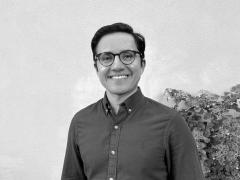
Ruben Vazquez Uribe studies microorganisms and how to harness them to improve human health, protect the environment, and enhance food quality and production. His research bridges microbiology, synthetic biology, and biotechnology to explore and engineer individual microorganisms and complex microbial communities. Ruben earned his Ph.D. in Bioengineering from the Technical University of Denmark, conducting research under the supervision of Morten Sommer. In 2020, he became group leader and co-led the Bacterial Synthetic Biology section at the Novo Nordisk Foundation Center for Biosustainability at the Technical University of Denmark. Since 2023, he has been with the VIB Center for Microbiology as Head of Fermentations in the group of Jeroen Raes. Throughout his career, Ruben has developed and applied novel technologies in synthetic biology, gene editing techniques, microbiome research, food fermentation, functional metagenomics, biosensors, and cultivation-based multiplexed phenotyping. By leveraging microbes, he aims to develop innovative solutions in health, pharmaceuticals, environmental science, and food technology.
Hooman Hefzi
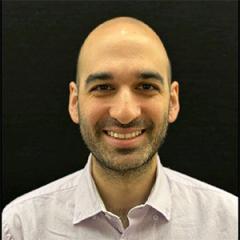
Hooman Hefzi is an Associate Professor at the Technical University of Denmark, leading the Advanced Mammalian Cell Engineering group. The group’s focus is optimizing biologics production through data-driven improvements to host cell lines, leveraging high-dimensional omics data and AI/ML classifiers for target identification. Previously, he led the Omics and Modeling Team in Biologics Technical Development at Biogen. Hooman received his Ph.D. in Dr. Nathan Lewis’s lab at UC San Diego, where he led the reconstruction of the first genome-scale metabolic model of Chinese hamster ovary cells and showed that the Warburg effect is dispensable for normal proliferation in mammalian cells.
Program
Introduction & Course overview
Introduction to CRISPR/Cas9
Lab introduction
gRNA design for NHEJ/ Whole-Gene Knockout (theory & practical)
Lunch (provided)
Lab sessions 1 - gRNA cloning
Lab session 2 - gRNA cloning (continued), donor generation
Lunch (provided)
DNA repair pathways; gRNA & donor design for HDR (theory & practical)
Coffee break (provided)
Lab session 3 - donor generation (continued), prepare editing experiments
Lab session 4 - editing experiments
Lunch (provided)
Lab session 4 - continued
Coffee break (provided)
Genome editing in Mammalian Cells - Hooman Hefzi (invited speaker DTU)
Primer design for edit confirmation (theory + practical)
Lab session 5 - evaluate editing via colony PCR & Sanger sequencing
Lunch (provided)
Lab session 5 - continued
Coffee break (provided)
Genome editing in plants - Ellen Slaman (VIB-PSB)
Analyzing genotyping results (theory + practical)
Coffee break (provided)
Global analysis of editing efficacy (practical)
Lunch (provided)
Methods to enhance HDR in bacteria & eukaryotes
Coffee break (provided)
Beyond CRISPR/Cas9
Wrap-up & remaining questions
Practical info


18 August 2025 - 22 August 2025
Heverlee - Landbouwinstituut
Kasteelpark Arenberg 20
3001 Leuven
Belgium
18 August 2025 - 22 August 2025
Heverlee - Landbouwinstituut
From Leuven station, you can take a bus to Kantineplein. Please check Routeplanner De Lijn for schedules.
18 August 2025 - 22 August 2025
Heverlee - Landbouwinstituut
18 August 2025 - 22 August 2025
Heverlee - Landbouwinstituut
From Public car parks:
Nearest car parks KU Leuven - can only be used provided you have valid access rights. More info here.
00.P003 - car park
01.P01 - visitor parking Kapeldreef 01
03.P01 - visitor parking Kapeldreef 03
05.P01 - visitor parking Kapeldreef 05
Access way to entrance hall (91.250) from car park (00.P003)
18 August 2025 - 22 August 2025
Heverlee - Landbouwinstituut
Rooms:
LAND 00.207 (theory course)
LAND 00.60 (lab sessions)