




CRISPR in action: Practice and theory of genome engineering

CRISPR in action: Practice and theory of genome engineering
17 August 2026, 9h00-17h00
18 August 2026, 9h00-17h00
19 August 2026, 9h00-17h00
20 August 2026, 9h00-17h00
21 August 2026, 9h00-17h00
General context
CRISPR technology has revolutionized genome editing, making precise genetic modifications with unprecedented speed and accessibility. For anyone working in molecular biology or genetics, a solid understanding of CRISPR is no longer optional - it's essential.
You will learn how to design gRNAs, build CRISPR vectors, perform genome edits, and evaluate editing outcomes. By the end of the course, you will have the knowledge and practical skills to confidently design and execute your own CRISPR experiments, bridging the gap between concept and real-world application.
- Design gRNAs using efficiency prediction and assess off-target risk.
- Construct CRISPR vectors applying appropriate cloning strategies and component selection.
- Optimize HDR donor templates for precise genome edits according to design criteria.
- Perform genome editing and conduct genotyping analysis with Sanger sequencing
- Interpret editing results
- Explain different approaches to analyzing CRISPR experiments
- Identify potential experimental pitfalls and propose improvements to CRISPR workflows
Through interactive lectures and guided laboratory sessions, this hands-on training combines theory and practice to give you a comprehensive introduction to CRISPR-based genome engineering. You can engage with invited experts during their lectures.
This training is designed for researchers, graduate students, and laboratory professionals working in molecular biology, genetics, or related fields who want to integrate CRISPR-based techniques into their research projects.
Participants should have a basic understanding of molecular biology, including concepts such as DNA structure, gene expression, PCR amplification, cloning, and enzyme restriction.
- Benchling - gRNA and donor design, evaluation of editing outcomes
- CRISPOR, CHOPCHOP - gRNA design
- TIDE, CRISPResso2 - analyzing sequencing results
- Off-target evaluation tools - predicting potential unintended edits
Theoretical background
Participants will explore key concepts, including:
- History, biology, and applications of CRISPR/ Cas9
- DNA repair pathways - mechanisms influencing genome editing outcomes
- Key considerations for the successful design of a CRISPR experiment, including target selection, gRNA design, and experimental controls
- Strategies to improve the efficacy of genome editing
- Expanding the CRISPR toolbox - alternative Cas nucleases and editing systems
Experimental modules
Hands-on training emphasizes practical CRISPR/Cas9 applications, guiding participants to create gene knockouts and introduce precise mutations through structured lab exercises.
Each student will receive a kit to perform the experiments with the support of our experienced trainers.
This course is part of the learning path Genome engineering.
"The course was exceptionally well organized, with a perfect balance between theory and hands-on lab work. The planning was remarkably precise, making the entire experience smooth and efficient. The trainers demonstrated outstanding expertise and practical knowledge in the lab, which greatly enhanced the learning process. What impressed me the most was the personalized approach: the trainers adapted to each participant's level and provided tailored guidance on real challenges we face in our own research. This made the course not only informative but truly relevant and impactful."
Participant edition 2025
"What I loved most was the significant interaction between trainers and participants. We could ask every single question without hesitation, and the trainers answered patiently and thoroughly; they genuinely wanted to share as much knowledge as possible. The balance theory and lab work were perfect, and the group size was just right. The invited speakers added real value. For me, the lecture on plats stood out, it was clear, engaging, and incredibly relevant to my work".
Participant edition 2025
Supporting the practical sessions of this course
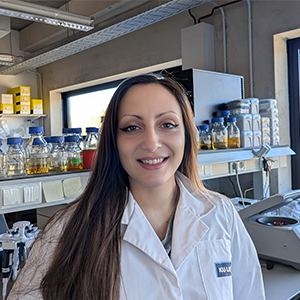
Sara Baco holds a Master's degree in Molecular and Industrial Biotechnology from the University of Bologna, where she built a strong foundation in both fundamental science and its practical applications. She is currently a PhD researcher in Systems Biology, specializing in dissecting the mechanisms and functional consequences of synonymous mutations, genetic changes that are frequently underestimated yet carry significant biological implications. Her research is driven by a curiosity for the unexpected, exploring how subtle genomic variations can give rise to far-reaching biological effects.
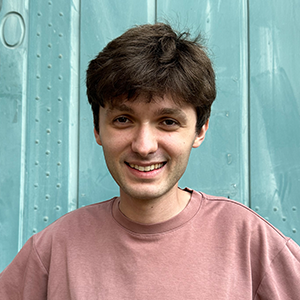
Vlad Batagui is a PhD student in the Vonesch lab for Genome Editing and Systems Genetics. In the lab, he is involved in technology development and studying genetic interactions using massively parallel precision genome editing.
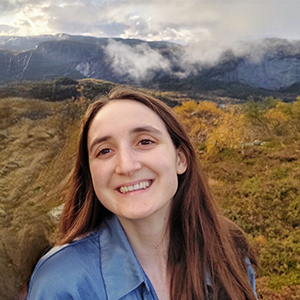
Jana Nysten studies how genetic variation and genetic interactions shape biological traits using high-throughput CRISPR tools in yeast. She aims to test thousands of sequence variants and their combinations to better understand how genotype translates into phenotype.
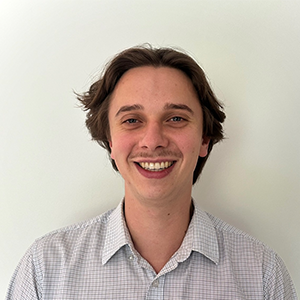
Siebe Thys is fascinated by the elegance of well‑designed biological systems and enjoys assembling these components to create new, purposeful functions. Driven by a passion for technology development and a deep interest in the genotype–phenotype relationships underlying antibiotic resilience, he began a joint PhD in the Vonesch and Michiels labs. Now in his second year, he is developing a high‑throughput CRISPR/Cas9‑based genome‑editing strategy in E. coli.
Trainers
Sibylle Vonesch

Sibylle Vonesch obtained her PhD from ETH Zurich, Switzerland, in 2015. During her doctoral studies with Ernst Hafen, she employed genome-wide approaches to study how intra-species genome variation shapes hereditary traits. In 2015, she joined Lars Steinmetz’s group in Heidelberg, Germany, as a postdoctoral researcher, where her work focused on genomics and the development of multiplexed genome editing technologies in the yeast S. cerevisiae. In 2021, she established the Laboratory for Genome Editing and Systems Genetics at KU Leuven and the VIB-KU Leuven Center for Microbiology. Her team develops CRISPR-based high-throughput genome editing tools for microbes and applies them in large-scale genetic screens to study fundamental principles in molecular and complex trait genetics.
Ruben Vazquezuribe
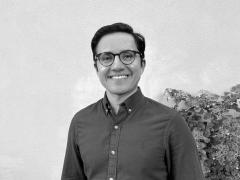
Ruben Vazquez Uribe studies microorganisms and how to harness them to improve human health, protect the environment, and enhance food quality and production. His research bridges microbiology, synthetic biology, and biotechnology to explore and engineer individual microorganisms and complex microbial communities. Ruben earned his Ph.D. in Bioengineering from the Technical University of Denmark, conducting research under the supervision of Morten Sommer. In 2020, he became group leader and co-led the Bacterial Synthetic Biology section at the Novo Nordisk Foundation Center for Biosustainability at the Technical University of Denmark. Since 2023, he has been with the VIB Center for Microbiology as Head of Fermentations in the group of Jeroen Raes. Throughout his career, Ruben has developed and applied novel technologies in synthetic biology, gene editing techniques, microbiome research, food fermentation, functional metagenomics, biosensors, and cultivation-based multiplexed phenotyping. By leveraging microbes, he aims to develop innovative solutions in health, pharmaceuticals, environmental science, and food technology.
Olaf Klingbeil
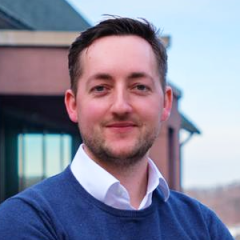
Olaf Klingbeil is a group leader at the VIB–KU Leuven Center for Cancer Biology (CCB) and an assistant professor in the Department of Cellular and Molecular Medicine at KU Leuven, where he heads the Laboratory for Functional Genomics and Gene Regulation. He earned his doctorate (Dr. rer. nat.) at Humboldt University Berlin in collaboration with Bayer Pharma, then spent his postdoctoral years (2017–2024) at Cold Spring Harbor Laboratory before starting his own group in 2025.
His lab studies how cancer cells adapt to therapy and become resistant. Rather than treating resistance as a fixed genetic endpoint, his group views it as a dynamic, time-dependent process — asking not only which genes and pathways matter, but when they act, in what order, and whether their effects can be reversed. This work is anchored in pancreatic ductal adenocarcinoma (PDAC), a cancer notorious for its plasticity and treatment resistance, though the underlying questions apply broadly across cancer types.
To get at these questions, the lab builds and applies CRISPR-based functional genomics — the focus of this course. This includes pooled single-gene and combinatorial screens, paralog-targeting strategies that expose redundancy simpler screens miss, and inducible systems that add temporal control, read out with single-cell and chromatin profiling. As one example of what the approach reveals, he used paralog-focused CRISPR screening to identify the MARK2 and MARK3 kinases as catalytic co-dependencies of YAP/TAZ signaling — a redundancy-driven resistance mechanism that candidate-by-candidate methods would have missed.
Today his group is building a dedicated CRISPR functional genomics platform at VIB–KU Leuven Center for Cancer Biology, supported by an FWO Odysseus grant, to map how signaling and transcriptional networks reorganize under therapeutic pressure.
Program
Introduction & course overview
Introduction to CRISPR/Cas9
Coffee break (provided)
Lab introduction
gRNA design for experiment 1: NHEJ/ Whole-gene knockout (theory & practical)
Lunch (provided)
Lab session 1 - gRNA cloning
CRISPR vectors for different species, resources
Lab session 2 - gRNA cloning (continued), donor generation
Lunch (provided)
DNA repair pathways; gRNA donor design for experiment 2: precision editing (theory & practical)
Coffee break (provided)
Lab session 2 - continued
Lab session 3 - editing experiments
Lunch (provided)
Lab session 3 - continued
Time to ask for input on your own project or model system
Primer design for edit confirmation (theory & practical)
Lab session 4 - evaluate editing via colony PCR & Sanger sequencing
Lunch (provided)
Lab session 4 - continued
Coffee break (provided)
Genome editing in mammalian cells - Olaf Klingbeil (invited speaker)
Analyzing genotyping results (theory & practical)
Coffee break (provided)
Analyzing amplicon-sequencing data using TIDE, TIDER, and CRISPResso (practical)
Lunch (provided)
Improving precision editing efficiency: methods to enhance HDR; base and prime editing
Coffee break (provided)
Beyond CRISPR/Cas9
Wrap-up & remaining questions
Practical info


17 August 2026 - 21 August 2026
Heverlee - Landbouwinstituut
Kasteelpark Arenberg 20
3001 Leuven
Belgium
17 August 2026 - 21 August 2026
Heverlee - Landbouwinstituut
From Leuven station, you can take a bus to Kantineplein. Please check Routeplanner De Lijn for schedules.
17 August 2026 - 21 August 2026
Heverlee - Landbouwinstituut
17 August 2026 - 21 August 2026
Heverlee - Landbouwinstituut
From Public car parks:
Nearest car parks KU Leuven - can only be used provided you have valid access rights. More info here.
00.P003 - car park
01.P01 - visitor parking Kapeldreef 01
03.P01 - visitor parking Kapeldreef 03
05.P01 - visitor parking Kapeldreef 05
Access way to entrance hall (91.250) from car park (00.P003)