


How to start with Oxford Nanopore sequencing?

How to start with Oxford Nanopore sequencing?
9 November
General context
This workshop will provide participants basic information on (ONT) nanopore sequencing, including:
- how to set up an experiment
- type of applications that can benefit from nanopore sequencing
- where to get support and services
- how to access VIB facilities when needing support or services
The participants will learn about applications that have been executed in the VIB Center for Molecular Neurology, the VIB Center for Plant Systems Biology and the VIB Nucleomics Core.
They will obtain first-hand information on available services, data analysis, preferred methods in sample and library prep and how to find relevant help and resources when dealing with the data.
Participants will gain information and knowledge from experienced teams working on ONT platforms and with ONT data since the early beginnings.
They will be able to scientifically evaluate whether an ONT platform is a suitable method for their sequencing applications.
They will be able to evaluate appropriate quality of the samples, most suitable method for library prep and analysis.
Participants will also gain an insight in the current available options and future applications.
Trainers
Geert Joris

Geert Joris is ONT Expert at the VIB-UAntwerp Center for Molecular Neurology. He is responsible for the wet lab workflow, protocol benchmarking, optimization and Implementation for Nanopore sequencing.
Heloise Bastiaanse

Heloise Bastiaanse is a post-doctoral researcher in the Bio-energy and Bio-aromatic group of Prof. Wout Boerjan in the VIB Center of Plant Systems Biology. She works on the project ‘POPMET’, aimed at the large-scale identification of metabolites, metabolic pathways and their genes in the model tree poplar using cutting-edge -omics technologies in 650 genotypes collected along the main rivers of Europe.
Mojca Strazisar
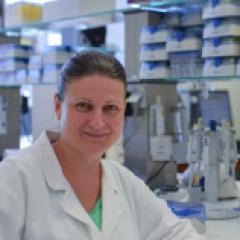
Dr. Mojca Strazisar is Expert Technologist at the VIB-UAntwerp Center for Molecular Neurology., where she leads the Long Read Sequencing Expertise Unit. She is involved in consulting, project management, protocol benchmarking, optimization, troubleshooting and novel protocol development for Nanopore sequencing.
Peter De Rijk

Dr. Peter De Rijk is responsible for the analysis of the data generated by Nanopore sequencing. To this end he develops and upkeeps the analysis pipelines and he is involved in analysis consulting, implementation, benchmarking and troubleshooting.
Stéphane Plaisance

Stéphane Plaisance is staff scientist at the VIB Nucleomics Core in Leuven. As NGS analysis specialist, he helps fellow biologists digest their data. Before his work at VIB, he was a post-doctoral researcher at KULeuven studying transcription regulation in cancer molecular biology and cardiovascular molecular medicine. He obtained his PhD in Molecular and Cellular Biology at the Pierre and Marie Curie University in Paris.
Stephane Rombauts

Stephane Rombouts is staff scientist in the Van de Peer Lab of the VIB Center for Plant Systems Biology, where he maintains the PlantCARE database of plant promoters and regulatory elements. He is also involved in the annotation of new plant genomes using the Eugene gene prediction platform that he collaborated on.
Tim De Pooter
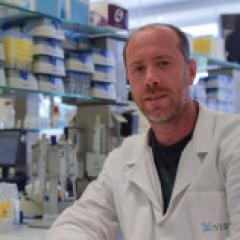
Tim De Pooter is ONT Expert at the VIB-UAntwerp Center for Molecular Neurology. He is responsible for the wet lab workflow, protocol benchmarking, optimization, troubleshooting, and novel protocol development and Implementation for Nanopore sequencing.
Wouter De Coster

Wouter De Coster is a postdoctoral researcher and research associate at the VIB-UAntwerp Center for Molecular Neurology,, focusing on the analysis of sequencing data to identify variants relevant to neurodegenerative diseases, mainly structural variants using long read PromethION sequencing.
Program
9h30-10h30 Overview of ONT technology and wet lab workflow
10h30-11h00 Q&A + Coffee
11h00-13h00 ONT data analysis
13h00-14h30 Lunch + Visit the sequencing lab
14h30-15h30 Succes stories
15h30-16h10 What can we do for you?
16h10-16h30 New disruptive-use cases
16h30-17h00 Q&A
Practical info


09 November 2023
Antwerp - Campus Drie Eiken UAntwerpen
Universiteitsplein 1
2610 Antwerpen
Belgium
09 November 2023
Antwerp - Campus Drie Eiken UAntwerpen
Antwerp has a dense public transportation network. Buses and trams are available to take you to many different parts of the city. There are direct bus links to various other towns and cities as well. Plan your route using the De Lijn timetables.
- Campus Middelheim - Campus Groenenborger: around 7 min. on foot
- Campus Middelheim - Campus Drie Eiken: around 35 min.
- Campus Groenenborger - Campus Drie Eiken: around 45 min.
- Stadscampus - Campus Middelheim: around 45 min.
- Stadscampus - Campus Groenenborger: around 55 min.
- Stadscampus - Campus Drie Eiken: around 60 min.
Did you know Antwerp also has a water bus? You can use it to travel between the Antwerp city centre and nearby towns.
09 November 2023
Antwerp - Campus Drie Eiken UAntwerpen
Antwerp is a bike-friendly city. Get to know the smart and cheap way to travel around in Antwerp fot students.
For short trips in and around the city, a rental bike is ideal. Apart from the student bicycle and the Velo city bikes, there are several other bike rental options.
Do you need to cross the Scheldt? Check the availability of the bike lifts and escalators of the tunnels, or take Antwerp’s ferry service with your bike.
Cycling between campuses:
- Stadscampus - Campus Middelheim: 20 min.
- Stadscampus - Campus Groenenborger: 25 min.
- Stadscampus - Campus Drie Eiken: 30 min.
- Campus Middelheim - Campus Groenenborger: 4 min.
- Campus Middelheim - Campus Drie Eiken: 10 min.
- Campus Groenenborger - Campus Drie Eiken: 8 min.
The newest way to travel around Antwerp is by shared electric scooter.
09 November 2023
Antwerp - Campus Drie Eiken UAntwerpen
It’s recommended to travel to and in Antwerp by public transport. If you are travelling by car, take the following into account:
- There are P+R zones where you can park on various main roads into Antwerp. They are ideal places to switch to bus, tram or bike a few kilometres from the campus.
- The Antwerp city centre and part of Linkeroever (Antwerp’s left bank) are a low-emission zone: highly polluting vehicles are not allowed into the city.
- Keep in mind that the zone around the Stadscampus is a residential area with a speed limit of 20 km/h. Pedestrians freely make use of the entire road.
- Take possible road works and events into account.
- Within Antwerp, you can make use of the taxi service.
Campus Drie Eiken en Campus Groenenborger have free university parking spots.
Carpooling is not only fun and ecological, but also good for your wallet and you get to meet new people. Are you looking for a car ride or a fellow passenger, occasionally or daily? Take a look at our carpool platform.
09 November 2023
Antwerp - Campus Drie Eiken UAntwerpen
Neuron Room, Building V of the University of Antwerp (UA), Parking 4, Universiteitsplein 1, 2610 Antwerpen.
Via public transport: from Antwerp Central Station take bus 17 to UZA and get out at the last stop. Walk around the hospital building via the right side and pass building T (see map in the link below).
By car: see map