




Machine learning and deep learning fundamentals

Machine learning and deep learning fundamentals
18 November 2026, 9h30-17h00
19 November 2026, 9h30-17h00
General context
Machine learning and deep learning are transforming research by enabling data-driven discoveries and predictive modeling. For many researchers, these techniques can unlock new insights from complex datasets, but getting started can feel overwhelming. This two-day workshop is designed for researchers with little or no prior experience in machine learning who want to apply these methods in their own work.
- Explain the fundamental concepts of machine learning and deep learning
- Apply data preprocessing techniques such as handling missing values, scaling features, and splitting datasets
- Implement regression and classification models with scikit-learn and evaluate their performance using appropriate metrics
- Construct simple neural networks and convolutional neural networks with PyTorch framework
- Identify issues with model behavior, like overfitting, and adopt solutions such as regularization or dropout
- Interpret the results of machine learning and deep learning models to make informed decisions for research applications
Through a mix of clear explanations and hands-on exercises in Jupyter notebooks, you will learn how to process data, build regression and classification models, and train neural networks and convolutional neural networks.
- No prior machine learning experience
- Familiarity with Python will be required (recommended course: Programming in Python: master your first project)
- Jupyter Notebook
- Scikit-learn
- PyTorch
This course is part of the learning path Machine learning.
AI methods used
The course covers supervised machine learning methods (regression and classification) using scikit-learn, and deep learning methods (neural networks and convolutional neural networks) using PyTorch. Participants will apply these methods focusing on how each technique supports predictive modelling.
Trainers
Jolan Heyse
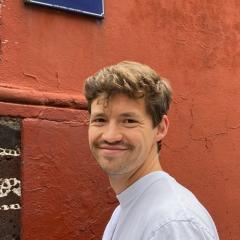
Jolan Heyse is a trainer at VIB specializing in artificial intelligence and data science for life sciences. He holds a master's degree and a PhD in Biomedical Engineering from Ghent University, where his research focused on applying AI to EEG-based epilepsy diagnosis. Before joining VIB, Jolan worked as a data scientist at AZ Delta, developing AI applications for healthcare. His expertise includes machine learning, biomedical signal processing, Large Language Models (LLMs), and translating complex algorithms into practical tools for researchers. At VIB, he designs and delivers training programs to help scientists with data-driven methods.
Bruna Piereck

Bruna Piereck is a bioinformatics trainer at VIB and ELIXIR-BE training coordinator deputy. She obtained a Master and PhD degree in Molecular Genetics, with a focus on Bioinformatics from the Federal University of Pernambuco, Brazil, in 2019. During her PhD, she had the chance to collaborate with the university of Luxembourg and the McGill university in Quebec Canada for a short time. Ever since she has been involved with teaching and research and Since March 2022, she joined VIB with the mission of teaching and assist other trainers in a variety of topics.
Program
Welcome and set-up
Introduction to machine learning
Coffee break (provided)
Regression
Lunch (provided)
Classification
Coffee break (provided)
Model selection
Introduction to neural networks
Coffee break (provided)
Deep neural networks
Lunch (provided)
Convolutional neural networks
Coffee break (provided)
Advanced deep learning topics
Wrap-up
Practical info


18 November 2026 - 19 November 2026
Leuven - Research Coordination Office KULeuven
Schapenstraat 34
3000 Leuven
Belgium
18 November 2026 - 19 November 2026
Leuven - Research Coordination Office KULeuven
By Bus:
At the station, take bus number 2 (direction Heverlee Campus).
You take the stop at the Standaard Boekhande on the Naamsestraat, the monumental Sint-Michielskerk on the other side of the street. Go back a little and turn left into the Sint Antoniusberg (steep down). At the Damiaanplein you can turn left into the Schapenstraat.
On Foot:
You can reach the area from the station in about 20 minutes on foot.
By Bike:
You can also rent bikes at the station (a few electric bicycles available). However, it is advisable to reserve your bike in advance.
How to:
When you come out of the station, take the Bondgenotenlaan right in front of you. You walk all the way through this until you reach the Grote Markt, where you walk to the left of the church and past the town hall. Take the second street after the town hall on the left to the Oud Markt. You walk to the end of the Oude Markt, where you leave the Oude Markt on the right and then immediately turn left into the Parijsstraat. After crossing the Damiaanplein, you enter the Schapenstraat .
18 November 2026 - 19 November 2026
Leuven - Research Coordination Office KULeuven
18 November 2026 - 19 November 2026
Leuven - Research Coordination Office KULeuven
NB! There is ample parking, but a code is required to access it. Your contact person can provide you with this code (changed daily).
18 November 2026 - 19 November 2026
Leuven - Research Coordination Office KULeuven
No contact information for this location has been provided.