


Machine Learning & Deep Learning Workshop
2 days
General context
In today's data-driven world, Machine Learning has become a crucial skill for professionals across various industries. Whether you're interested in data analysis, predictive modelling, image recognition, or natural language processing, this two-day course is designed to provide you with a comprehensive understanding of machine learning concepts and practical skills.
Over the duration of the course, we will explore three key areas of machine learning: Classical Machine Learning, Deep Learning, and Generative Learning. Through a combination of short lectures and hands-on Python projects, we will dive into the fundamental algorithms, techniques, and models that drive these fields forward.
Throughout the course, we'll put theory into practice with Python projects. Using popular libraries like Scikit-learn and PyTorch, you'll have hands-on experience applying the concepts learned in class. These projects will strengthen your understanding and enable you to build machine learning models from scratch.
By the end of this course, you will have a well-rounded understanding of machine learning, spanning classical techniques, deep learning architectures, and generative learning models. You'll be equipped with the knowledge and skills to tackle a wide range of machine learning challenges and make informed decisions when applying these techniques in your own projects.
The code for the workshop is written in Python. If you have no experience with Python and you want to invest time to thoroughly learn to program in Python you should follow our online or in person Python introduction training.
If you don't have time or interest to learn to program in Python, we will organize a crash course on Python in November in Ghent that will teach you enough Python basics to be able to follow the Machine learning training.
No background in Machine Learning is assumed, just a keen interest.
Trainers
Robbin Bouwmeester
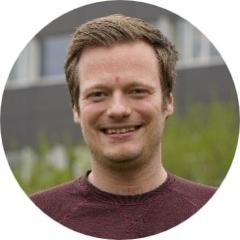
Dr. Robbin Bouwmeester is a senior postdoctoral researcher at the VIB-UGent Center for Medical Biotechnology. He uses deep learning throughout his research to better understand the behavior of peptides and small molecules in mass spectrometry.
Ralf Gabriels

Ralf obtained his PhD in the CompOmics group. He was granted a Junior Postdoctoral Fellowship by FWO to conduct research on novel applications of machine learning in proteomics, with a focus on peptide identification. He is a member of the European Bioinformatics Community for Mass Spectrometry organizational committee and he contributes to the development of community standards in computational mass spectrometry at HUPO-PSI.
Program
- Tabular Data: Introduce the concept of tabular data and its representation in machine learning. Discuss feature engineering, data preprocessing, and various algorithms suitable for tabular data analysis.
- Logistic Regression: Explain the logistic regression algorithm for binary classification problems. Cover the mathematical formulation, model training, and interpretation of results.
- Random Forest (Bagging): Discuss the concept of ensemble learning and focus on the random forest algorithm. Explain how bagging improves model performance and address topics like feature importance and hyperparameter tuning.
- XGBoost/LightGBM (Boosting): Introduce boosting algorithms, particularly XGBoost and LightGBM. Discuss their advantages and use cases.
- Image Data: Cover the basics of deep learning for image data analysis. Discuss convolutional neural networks (CNNs), their architecture, and how they handle image-related tasks such as image classification and object detection.
- Sequence Data: Focus on deep learning techniques for sequential data analysis. Discuss recurrent neural networks (RNNs). Explore applications like natural language processing and time series analysis.
- Transformers: Introduce the transformer architecture, which has revolutionized natural language processing and achieved state-of-the-art results. Discuss self-attention mechanisms and their applications in tasks like machine translation and language gen
- Understanding Dall-E, Stable Diffusion, GTP-4, chatGPT: Provide an overview of generative learning techniques. Discuss specific models like Dall-E, Stable Diffusion, GPT-4, and chatGPT, which have made significant contributions to generative learning ta
Practical info


25 November 2024 - 26 November 2024
Ghent - VIB/UGent FSVM II
Technologiepark 75
9052 Zwijnaarde
Belgium
25 November 2024 - 26 November 2024
Ghent - VIB/UGent FSVM II
From Ghent Sint-Pieters station, you can take a bus to Technologiepark. Please check Routeplanner De Lijn for schedules.
25 November 2024 - 26 November 2024
Ghent - VIB/UGent FSVM II
Looking for a custom cycling route? Try the online cycling route planner to easily and quickly identify the fastest, safest and/or most scenic route to any destination in Ghent.
Cycling route planner
Shared bicycles:
Several providers are active in the area.
Take a look at their platforms:
- Indigo Weel Pro app
- Bluebike
- DOTT
- BOLT eBikes
- Donkey Republic
There are also some public bicycle pumps at the park.
25 November 2024 - 26 November 2024
Ghent - VIB/UGent FSVM II
There is only one entrance to Technologiepark. At the entrance, please take a ticket - Parking is only allowed in regular parking spots (for instance in front of the building) and in the parking tower. Parking alongside the roads or in other places where there is no regular parking is prohibited.
25 November 2024 - 26 November 2024
Ghent - VIB/UGent FSVM II
room L4 of the FSVM2 building, Technologiepark, Gent