




Nextflow for reproducible and automated data analysis

Nextflow for reproducible and automated data analysis
4 June 2026, 9h30- 17h00
5 June 2026, 9h30-17h00
General context
This hands-on course introduces the principles and practice of building scalable and reproducible data analysis pipelines using Nextflow. As bioinformatics data volumes increase and analyses become more complex, workflow management tools play a key role in ensuring reproducibility and efficiency.
During the training, you will learn to develop and run pipelines on local machines, HPC clusters, and cloud platforms. Starting with the basics, the course guides you through creating a simple pipeline and enhancing it with Nextflow’s modern DSL2 syntax.
- Describe the core components of Nextflow (e.g., channels, processes, modules, workflows)
- Explain the roles of each component in pipeline development and the reproducibility aspect
- Construct a basic Nextflow pipeline using DSL2 syntax and execute it on a local machine.
- Modify configuration files to adapt pipeline parameters for different computing environments (e.g., local, cluster, cloud).
- Apply best practices for reproducibility and scalability in workflow design.
- Debug and refactor a simple pipeline to improve clarity, modularity, and performance.
The training combines theoretical sessions with hands-on activities. In the end, a small challenge invites you to apply all the skills you have learned.
Check this opportunity: Reproducible Data Analysis: an essential capability in modern science.
Researchers with no or little knowledge of containers or workflow pipelines.
- Completion of an HPC course is mandatory for individuals without prior experience in High Performance Computing before enrolling.
- You're familiar with doing bioinformatics on the command line and with Docker containers
- If you have no experience with the command line, we strongly recommend following the Linux initiation training first or the self-paced e-learning.
- If you have no experience with Docker, you can follow our training "Containerise data analysis with Docker & Apptainer"
This course is part of the learning path Reproducible data analysis.
Trainers
Kobe Lavaerts

Bioinformatician at VIB Nucleomics Core in Leuven. Currently mainly focusing on operating and developing routine pipelines for processing raw sequencing data.
Maria Tsontaki
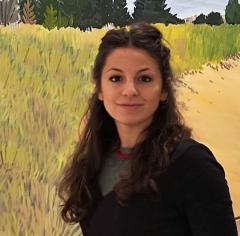
Maria Tsontaki is a Project Manager at the VIB Data Core. Previously working as a Bioinformatics Scientist in biotech, she is now part of the Data Core Compute team, ensuring researchers have access to computational resources and advanced software tools for scalable, reproducible data analysis. Her tasks in the team range from identifying and coordinating user needs and requests to providing bioinformatics-related support.
Program
Building Blocks
Coffee break (provided)
Processes and Workflows
Lunch (provided)
Creating our first pipeline
Coffee break (provided)
Modules and Subworkflow
Config files, Containers and Reports
Coffee break (provided)
Exercise
Lunch (provided)
Project Challenge
Coffee break (provided)
Project Challenge
Practical info


04 June 2026 - 05 June 2026
KU Leuven - Kartuizerklooster (KTKL)
Tervuursevest 242
Gebouwnummer: 150-71
3000 Leuven
Belgium
04 June 2026 - 05 June 2026
KU Leuven - Kartuizerklooster (KTKL)
By Bus:
At the train station, take bus number 1 (direction Heverlee Campus).
You can use De Lijn's route planner for more travel options.
04 June 2026 - 05 June 2026
KU Leuven - Kartuizerklooster (KTKL)
By Bike:
You can also rent bikes at the station (a few electric bicycles available). However, it is advisable to reserve your bike in advance.
04 June 2026 - 05 June 2026
KU Leuven - Kartuizerklooster (KTKL)
Public car parks: public car parks in the city center of Leuven.
Nearest car parks KU Leuven: The car parks can only be used if you have valid access rights. More info about the KU Leuven parking policy.
04 June 2026 - 05 June 2026
KU Leuven - Kartuizerklooster (KTKL)
No contact information for this location has been provided.