




Pursuing an academic career

Pursuing an academic career
15 April 2027, 9h30 - 13h
16 April 2027, 9h30 - 13h
General context
Planning to build an academic career can feel overwhelming: funding pressures, mobility requirements, and unspoken expectations all play a role. This workshop offers practical advice and honest insights into what it takes to succeed as a professor in the life sciences.
You’ll learn what selection committees look for, explore strategies to strengthen your academic profile, and gain clarity on whether this path aligns with your goals.
After this training, you will:
- Understand the key factors that influence academic career progression and selection committee decisions.
- Identify strategies to secure funding and build a strong scientific track record.
- Learn how to enhance publication quality and visibility in competitive journals.
- Evaluate the role of international mobility and how to plan it strategically.
- Reflect on work-life balance challenges and how to manage them effectively in academia.
This online workshop combines expert advice with real-world perspectives:
- Interactive session with Prof. Sven Hendrix, addressing key steps for building an academic career.
- Panel discussion with young professors sharing honest insights and practical advice from their own journeys.
Participants will have ample time for Q&A and discussion throughout.
PhD students and early stage postdocs - especially in the life sciences and similar domains such as biology, biomedical sciences and medicine - who want to get the best advice on how to become a professor and how to pursue a scientific career with success.
I really liked the way Sven was realistic about certain topics and clearly had real experience in what he was talking about — it wasn’t just theory. He is genuinely interested in sharing and transmitting his knowledge to others, as shown by his blog and the books he has written.
We had a sufficient amount of time for discussion; he was very helpful with all our questions and willing to support us even more in the future if we need any guidance. Overall, I would say that I am very satisfied with the course.
Edition 2025 - Eugenia Pitsili, VIB-UGent Plant Systems Biology, postdoc
The training provided exactly what I was looking for, a lot of helpful tips and comments to know how to steer my career.
Participant edition 2024
The trainer is very experienced, considered every participant, and was patient with our questions. The content of the course is proper and inspiring for us, no matter Ph.D. or postDoc, for everyone who is pursuing the beginning of their research career.
Participant edition 2023
Trainers
Sven Hendrix
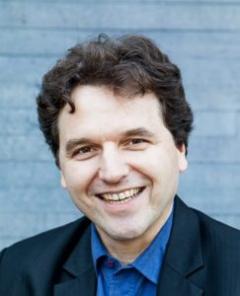
Prof. Sven Hendrix is a Full Professor of Neuroanatomy and Chairman of the Organoid Expertise Center at Medical School Hamburg, Germany. Previously, he worked for more than a decade as a Full Professor of Neuroanatomy and as Director of the Doctoral School for Medicine & Life Sciences at Hasselt University in Belgium. Together with colleagues and partner universities, he organized more than 100 local and international events, and for over ten years he has published his blog smartsciencecareer.com to support young scientists in their careers.
His research focuses on neuroimmunology and translational models of tissue injury. He has published more than 100 peer-reviewed papers (including in Brain and Journal of Clinical Investigation), has an h-index of 50 with over 10,000 citations, and has raised more than €5 million in competitive funding from European and national agencies.
Like many scientists, his career has not been a straight path but an emotional roller coaster, with many moves between jobs and countries. He studied medicine in Berlin and spent time abroad, including studies in Parma (Italy, Erasmus), short research stays in Hamamatsu (Japan) and Harvard (USA), and a longer research project in London (UK). After six years at the Department of Anatomy of the Charité Hospital in Berlin, he became a Full Professor at Hasselt University (Belgium).
Navigating his scientific career has been a long and sometimes difficult journey. Today, he is eager to share his experience and to make the path easier for young scientists.
Program
- Introduction: What are my chances to become a professor?
- How to convince a selection committee?
- The best strategy to get funding for my profile
- The best publication strategy for my profile
- Teaching – Do I really need teaching skills?
- Technical skills – When are technical skills relevant to become a professor?
- Three types of professors – Which type am I?
- International mobility – Do I really have to work abroad?
- Intersectoral mobility – Should I have industry experience, and can I easily come back?
- Network & international reputation
- Define your niche – communicate your USP
- Vision + leadership – How to develop scientific independence