


Spatial data analysis
19/01/2024
General context
This training will give an overview of spatial data analysis for a variety of targeted and untargeted spatial omics approaches. The training aims to provide early-career researchers an entry point into spatial data analysis and to give experienced users the opportunity to broaden their knowledge.
In a series of presentations, we will give an overview of the available tools for targeted transcriptomics and proteomics, untargeted transcriptomics, visualization, annotation and downstream spatial analyses such as neighborhood analysis, spatial enrichment, cell-cell interactions... The SPArrOW pipeline, developed by the Yvan Saeys group (VIB) for the analysis of spatial transcriptomics data, will be introduced. After each section, discussion and the exchange of expertise among attendants will be encouraged.
To this end, the training will give an overview of:
- the different analysis methods and tools that are typically being used
- the possible pitfalls during the analysis
- recommendations for experimental design
- who to contact to get assistance with the analysis of your spatial data
The training is intended for everyone in VIB who has generated spatial data or is planning to generate data in the near future and wants a broad overview on what is currently possible during spatial data analysis.
Those who are new to the field are advised to follow the "How to start with spatial omics" training first.
Trainers
Arne Defauw
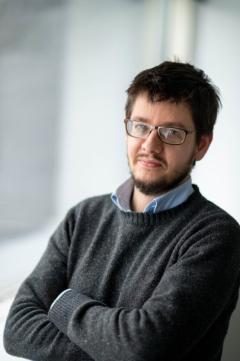
Arne holds a masters degree in Mathematics and a PhD in Physics. After his PhD he worked as a machine learning engineer in the industry, where he specialized in natural language processing. Now he works at VIB Spatial Catalyst, where he contributed to SPArrOW, a python library to analyse all types of spatial transcriptomics data. As a member of the Spatial Catalyst he also provides support for spatial omics data analysis and helps optimize bioinformatic tools for spatial analysis.
Benjamin Rombaut

In his PhD at the VIB Yvan Saeys Lab, Benjamin brings AI-Driven data science to life sciences. His main research topics are computer vision, active learning and spatial proteomics analysis. He gave courses in computational biology, organizes hackathons, and coaches public speaking workshops . He worked on the BioSegment platform for annotation of images and the spatial omics processing framework, SpatialData.
Frank Vernaillen

After working as a software developer in a company on physics-based modeling and 2D and 3D computer graphics, Frank joined VIB in 2016 to work on image restauration and registration of electron microscopy images, machine learning,... Via VIB's first imaging-based spatial proteomics platform, he got involved in spatial omics data analysis, and naturally joined the Spatial Catalyst when it was formed in 2023, to continue work on data analysis and development of analysis pipelines.
Julien Mortier

Julien obtained his PhD on phenotypic heterogeneity and stress responses in bacteria. In his postdoc at SciLifeLab, he developed a machine-learning based image analysis workflow to study phenotypes of bacteria under starvation conditions and he established an end-to-end workflow for Transposon Sequencing. Now he works at VIB Spatial Catalyst, where he provides support for spatial omics data analysis and helps optimize bioinformatic tools for spatial analysis.
Lotte Pollaris
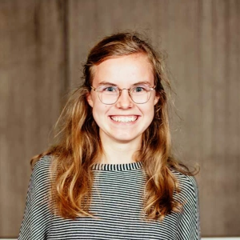
Lotte Pollaris pioneered research on spatial transcriptomics in the VIB Yvan Saeys Lab. The focus of her research is to optimize analysis workflows for subcellular resolution spatial transcriptomics. She has created SPArrOW, a workflow to analyse all types of spatial transcriptomics techniques. Lotte teaches programming in Python and was involved in teaching deep learning for biology. Additionally, she works on improving the SpatialData data format for spatial omics data in Python.
Program
9h30-10h15 Introduction by Julien Mortier
10h15-10h30 break
10h30-11h45 Targeted transcriptomics and the SPArrOW analysis pipeline by Lotte Pollaris
11h45-12h15 Tools for visualization by Arne Defauw
12h15-13h00 lunch
13h00-14h15 Analysis of spatial proteomics data by Benjamin Rombaut
14h15-14h30 break
14h30-15h15 Analysis of untargeted transcriptomics data by Frank Vernaillen
15h15-16h00 Downstream spatial analysis by Julien Mortier
Practical info


19 January 2024
Ghent - Clemenspoort
Overwale 3
9000 Ghent
Belgium
19 January 2024
Ghent - Clemenspoort
The Clemenspoort, the Clemenshuis, and the Clemenshof are integrated into a network of other buildings on the grounds of the former Redemptorist monastery, now the Overwale street.
Located just 250 meters from Ghent St. Pieters Station.
19 January 2024
Ghent - Clemenspoort
40 bike parking lots available.
19 January 2024
Ghent - Clemenspoort
Parking facilities available (€ 1.80 per hour). GPS address: Sint-Denijslaan 251. Take the driveway of the HoGent Sports Hall (not the HoGent Campus) and drive all the way to the end - past the HoGent parking areas. If you are registered in the 411 app, activate your license plate under the option 'Garage parking via license plate'. The barrier will open automatically, and payment will be processed via 4411.
19 January 2024
Ghent - Clemenspoort
+32 476 46 10 40