


Study intercellular communication with NicheNet
31/05/2024
General context
Today it is possible to obtain genome-wide transcriptome data from single cells using high-throughput sequencing (scRNA-seq). These scRNA-seq datasets can provide information about which cell types are present within a tissue, and about how they may potentially interact with each other. However, deciphering cell-cell communication from these datasets requires dedicated computational methods, such as NicheNet.
In this training, we will discuss how to analyze cell-cell communication from scRNA-seq data via the NicheNet analysis framework. We will highlight the benefits and limitations of NicheNet compared to other approaches, and guide the course participant in applying NicheNet to their datasets. Most recent analysis features from NicheNet-v2 will also be covered. Finally, we will also show how to analyze intercellular communication in multi-sample multi-condition scRNA-seq datasets with MultiNicheNet.
Participants should have some experience with R and know the basics of scRNA-seq data analysis. You can attend "Basic statistics in R" and "Analysis of single-cell RNASeq data" to get sufficient background. Contact janick.mathys@vib.be if you want to follow either of these introduction trainings.
Trainers
Robin Browaeys
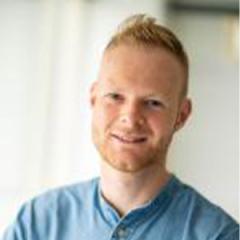
During his PhD at the Saeys lab, Robin developed NicheNet, one of the first and most used algorithms to study intercellular communication from transcriptomics data. Currently, he works as the coordinator of the bio-informaticians who are embedded in the wet-lab research groups of the VIB Center for Inflammation Research.
Marlies Brouckaert
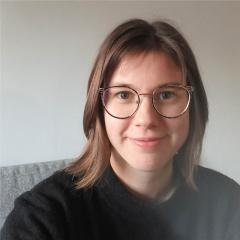
Marlies finished her PhD in the Bio-energy & bio-aromatics lab (PSB VIB-UGent), where she gained expertise in metabolomics, molecular biology, and bioinformatics. Marlies joined the Saeys lab as a postdoc in 2023 and has mainly been working on an extension of NicheNet called sigmaNicheNet to allow inference of metabolite-mediated cell-cell communication within the NicheNet framework.
Daniele Pittari
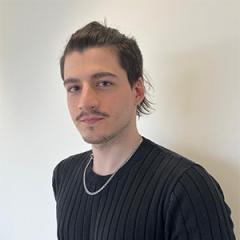
Daniele is a first-year PhD student in the Saeys lab with a background in experimental cell biology and bioinformatics. His work is centered around the refinement of cell-cell communication models and their relevance in capturing meaningful biological properties.
Chananchida Sang-aram
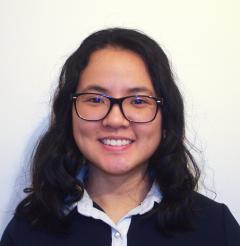
Chananchida (Sai) is a third-year PhD student in the Saeys lab with a background in biotechnology and bioinformatics. She has been maintaining the NicheNet GitHub repository since mid-2023. Currently, Sai is focused on exploring the best strategies for applying NicheNet to spatial transcriptomics data.
Ruth Seurinck
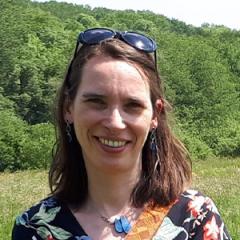
Ruth is a Postdoc in the group of Yvan Saeys where she optimizes the analysis of single-cell transcriptomics data to further our biological understanding of how cells cooperate across space and time to perform various functions.
Program
9:30 - 10:45: Introduction to NicheNet
10:45 - 11:00: Break
11:00 - 12:15: Application of NicheNet
12:15 - 13:15: Lunch
13:15 - 14:15: Application of NicheNet
14:15 - 14:30: Break
14:30 - 15:30: MultiNicheNet (introduction & demo)
15:30 - 15.45: Break
15:45 - 16:15: Future perspectives and Q&A
Practical info


31 May 2024
Leuven - Park Inn by Radisson
Martelarenlaan 36
3010 Leuven
Belgium
31 May 2024
Leuven - Park Inn by Radisson
The hotel is located 300m from Leuven Central Station, just a short 5 minute walk.
31 May 2024
Leuven - Park Inn by Radisson
Using your bike for longer distances? Check Cycle Highways.
31 May 2024
Leuven - Park Inn by Radisson
Underground P1-Parking Station Leuven, Martelarenlaan 4, 3010 Leuven or parking De Bond, Martelarenlaan 18, 3010 Leuven.
31 May 2024
Leuven - Park Inn by Radisson
+32 16 61 66 02
sales.leuven@parkinn.com
The course takes place in the Park Inn by Radisson Leuven hotel next to the train station in Leuven.
Route description: http://www.parkinn.com/hotel-leuven/location