




How to pursue an academic career
General context
Are you confused about your academic career? There is a solution.
- Are you struggling to get reliable and honest advice on how to pursue a successful academic career?
- Do you want to become part of the small group of scientists who know how to succeed in academia?
- Do you want to know the unspoken rules of a successful academic career?
- Do you want to know how to dramatically increase your chances to become a professor?
- Do you want to know how a selection committee screens for good candidates?
- Are you unsure whether you want to pay the price (a lot of effort, time and money) to become a professor?
During this training session, we want to give you pragmatic advice on how to become a professor in science.
Learn the open secrets of academia that nobody tells you!
Common questions young scientists ask are:
- What should I do after my PhD or Postdoc research?
- How do I get funding?
- How do I get published in high impact journals?
- Do I have to do research abroad? If so where should I go?
- How can I balance a career in science with a healthy and fulfilling family life?
During this training we will share the answers to these and many other questions that young scientists face as they make their first few career decisions.
After an interactive session with Prof. Sven Hendrix, young professors in the field of life sciences will share their experiences in their journey to become a professor.
PhD students, postdocs and staff scientists - especially in the life sciences and similar domains such as biology, biomedical sciences and medicine - who want to get the best advice on how to become a professor and how to pursue a scientific career with success.
- This training is only open for VIB participants and is free.
- Note that upon no show without valid justification a fee of € 100 will be charged and you will be blacklisted for the VIB training program for 1 year. Click here for more information.
Trainers
Sven Hendrix
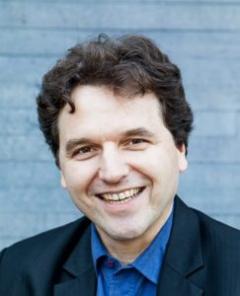
Prof. Sven Hendrix is a Full Professor of Neuroanatomy and Chairman of the Organoid Expertise Center at Medical School Hamburg, Germany. Previously, he worked for more than a decade as a Full Professor of Neuroanatomy and as Director of the Doctoral School for Medicine & Life Sciences at Hasselt University in Belgium. Together with colleagues and partner universities, he organized more than 100 local and international events, and for over ten years he has published his blog smartsciencecareer.com to support young scientists in their careers.
His research focuses on neuroimmunology and translational models of tissue injury. He has published more than 100 peer-reviewed papers (including in Brain and Journal of Clinical Investigation), has an h-index of 50 with over 10,000 citations, and has raised more than €5 million in competitive funding from European and national agencies.
Like many scientists, his career has not been a straight path but an emotional roller coaster, with many moves between jobs and countries. He studied medicine in Berlin and spent time abroad, including studies in Parma (Italy, Erasmus), short research stays in Hamamatsu (Japan) and Harvard (USA), and a longer research project in London (UK). After six years at the Department of Anatomy of the Charité Hospital in Berlin, he became a Full Professor at Hasselt University (Belgium).
Navigating his scientific career has been a long and sometimes difficult journey. Today, he is eager to share his experience and to make the path easier for young scientists.
Program
Log-in
Introduction
How to convince a selection committee and your future colleagues
How to plan an academic career
The best strategy to get funding for my profile
Lunch break
The best publication strategy for my profile
Teaching – Do I really need teaching skills?
Technical skills – When are technical skills relevant to become a professor?
Three types of professors – Which type am I?
International mobility – Do I really have to work abroad?
Intersectoral mobility – Should I have industry experience, and can I easily come back?
Coffee break
Network & international reputation & positioning
Define your niche – communicate your USP – Vision + leadership – How to develop scientific independence
What are my chances to become a professor?
Testimonials by young professors
- Lars Vereecke, Assistant Professor at Ghent University since October 2016
- Polina Novikova, Group Lead at MPIPZ - Max Planck Institute for Plant Breeding Research since September 2020
- Vanessa Vermeirssen, Professor at Ghent University since October 2019
- Heather Rice, Assistant Professor at University of Oklahoma Health Sciences Center since Aug 2019